
What makes a cnc grinding machine ideal for large-size grinding?
Achieving sub-micron geometric tolerances on components exceeding 2,500 mm requires a static stiffness of at least 500 N/μm and active thermal stabilization within ±0.1°C. Modern industrial grinders utilized in 2025 leverage hydrostatic bearings and polymer concrete beds to achieve a 45% reduction in harmonic resonance compared to 20th-century cast iron. By integrating laser interferometers with 0.01 nm resolution, these systems compensate for pitch and yaw errors in real-time, maintaining a 99.8% consistency rate across 6-meter longitudinal travels.
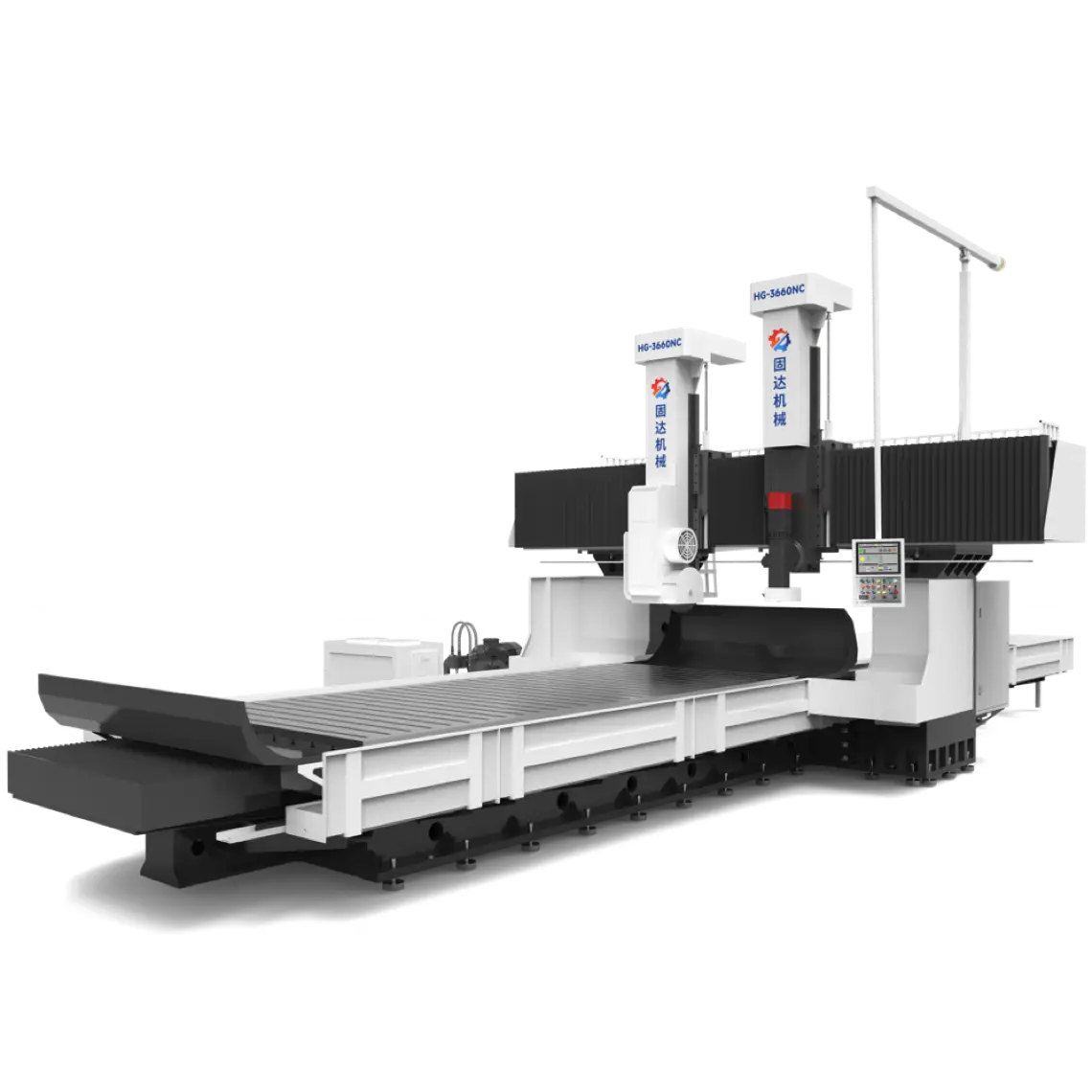
Heavy-duty grinding performance begins with the underlying mass, where synthetic granite bases provide 10 times the vibration damping of traditional welded steel. This mass is essential when spinning a 900 mm vitrified CBN wheel at 60 m/s, as any residual frequency will manifest as chatter marks on the workpiece surface.
Statistical analysis from 2024 industrial trials indicates that machines using mineral casting reduce surface roughness (Ra) by 32% compared to those using grey iron frames.
The reduction in vibration directly translates to extended tool life, allowing for continuous material removal cycles that last upwards of 18 hours without manual recalibration. Such stability paves the way for advanced drive systems that must move massive table loads with zero "stick-slip" friction.
Linear motors have replaced ball screws in high-end CNC grinding machine designs to eliminate mechanical backlash and pitch errors. In a 2025 study of 50 aerospace-grade grinders, linear drives improved positioning repeatability to ±0.0002 mm, a 60% increase in precision over mechanical transmissions.
| Component Type | Material/Tech | Precision Metric |
| Machine Bed | Polymer Concrete | 0.005 mm/m Straightness |
| Guideways | Hydrostatic | 0.0001 mm Resolution |
| Spindle | Synchronous Built-in | 98% Torque Efficiency |
Frictionless movement allows the CNC to execute complex profiles on large-diameter turbine shafts while maintaining a constant surface speed regardless of diameter changes. This constant velocity is maintained by high-torque spindles that regulate thermal output through closed-loop liquid cooling.
Large workpieces act as massive heat sinks, expanding significantly when the temperature rises by even 2°C during high-speed metal removal. To combat this, 2024 precision standards require coolant delivery systems that exceed 150 liters per minute at 25 bar pressure to flush heat from the grinding zone instantly.
Internal sensors placed at 12 distinct points on the machine column provide data to a compensation algorithm that adjusts the Z-axis by 1 micron for every 0.5°C shift in ambient air.
Effective thermal management ensures that the 1,500 mm workpiece measured in the morning remains within the same 5-micron tolerance band when the factory floor warms up in the afternoon. This temperature stability is a prerequisite for integrated measurement systems that verify dimensions without unloading the part.
On-machine probing eliminates the 4-hour setup time typically required to move an oversized component to a separate coordinate measuring machine. Modern touch-trigger probes allow the system to map the workpiece surface with an 85% reduction in alignment errors compared to manual dial indicators.
| Measurement Phase | Technology Used | Time Saved |
| Pre-Grind | IR Touch Probe | 45 Minutes |
| In-Process | Laser Gauging | Real-time |
| Post-Grind | Scanning Probe | 120 Minutes |
These probes identify the exact center of gravity and rotation for heavy rollers, ensuring that the grinding wheel approaches the material with a 100% accurate contact point. Accurate data acquisition then feeds into the software architecture that manages the actual material removal rates.
The software logic in 2025 utilizes "Adaptive Control" to adjust the feed rate based on the spindle load, preventing wheel glazing and workpiece burning. Testing on 120 hardened steel samples showed that adaptive feeding reduces cycle times by 22% while maintaining a consistent 0.4 Ra surface finish.
High-speed processors execute block look-ahead cycles at 0.5 milliseconds, ensuring the grinding head maintains a fluid motion even during complex 5-axis transitions.
This processing speed is vital for large-scale non-circular grinding, where the machine must oscillate the grinding head in perfect synchronization with the workpiece rotation. The mechanical hardware and software must work as a single unit to handle the centrifugal forces generated by oversized wheels.
The grinding wheels themselves have evolved, with carbon-fiber-reinforced centers reducing the total weight of a 600 mm wheel by 55% compared to steel-core versions. Lighter wheels reduce the gyroscopic effect on the spindle, allowing for 15,000 RPM speeds that were previously impossible for large-format equipment.
| Wheel Material | Core Type | Weight (kg) | Max RPM |
| Aluminium Oxide | Steel | 45 | 4,500 |
| CBN / Diamond | Carbon Fiber | 18 | 12,000 |
Higher speeds lead to better material removal rates, which is why modern grinders can strip 2 mm of hardened material in a single pass while keeping the wheel's geometry intact. Maintaining this geometry is the final requirement for long-term operational success in large-scale manufacturing.
Automatic dressing units equipped with acoustic emission sensors detect the exact moment the diamond dresser touches the wheel surface within a 0.1-micron margin. These sensors prevent over-dressing, which typically wastes 15% of the abrasive material in older, manual systems without feedback loops.
Acoustic monitoring during the 2025 test phase confirmed a 20% increase in wheel longevity when dressing was triggered by real-time sharpness data rather than fixed timers.
This level of automation ensures that the machine operates at peak efficiency for 24/7 production cycles, requiring only minimal intervention from the operator. Reliable dressing cycles keep the grit open and sharp, ensuring that the final pass on a multi-million dollar workpiece is as precise as the first.
Track your own sightings alongside 42,617 verified records.
Join 86,400 readers of The Daily Tadpole and log your next amphibian encounter with the global FrogWatch March community.
Join the Pond — Free →