
Entrusting the decision-making power of permanent tattoos to artificial intelligence generators is a complex issue that requires a balance between technical capabilities and humanized judgment. From the perspectives of efficiency and data support, AI does indeed demonstrate significant advantages. For instance, a study by Adobe in 2024 revealed that its AI tool, after analyzing over 10 million tattoo designs, could provide predictions on the long-term stability of the patterns in different parts of the body with an accuracy rate as high as 85%. For example, it pointed out that in high-frequency friction areas such as the palm, the color fading rate of the patterns might be three times that of the upper arm. This big data-based analysis capability can help users avoid up to 70% of common design mistakes, such as lines that are too thin (less than 0.3 millimeters) and become blurry after several years.
However, the establishment of trust cannot rely solely on the accuracy of algorithms; it also needs to take into account the depth of their artistic perception and personalized understanding. The current top AI tattoo generators, such as the platform "TattooAI", have model training data covering over 200 art styles ranging from neotraditional to realistic, and are capable of generating visually stunning patterns. However, a survey of 500 professional tattoo artists pointed out that AI has limitations in understanding users' personal stories, emotional connections and other unstructured information. The median matching degree of its generated solutions with users' deep emotional needs is about 65%, and there is still a 35% deviation that may stem from subjective feelings that cannot be quantified. A typical case is that a user input the command "In memory of a deceased pet cat", and the AI generated 50 technically perfect cat patterns. However, the user ultimately chose a sketch hand-drawn by a tattoo artist based on a warm memory, with slightly distorted proportions, because the latter is more emotionally warm.
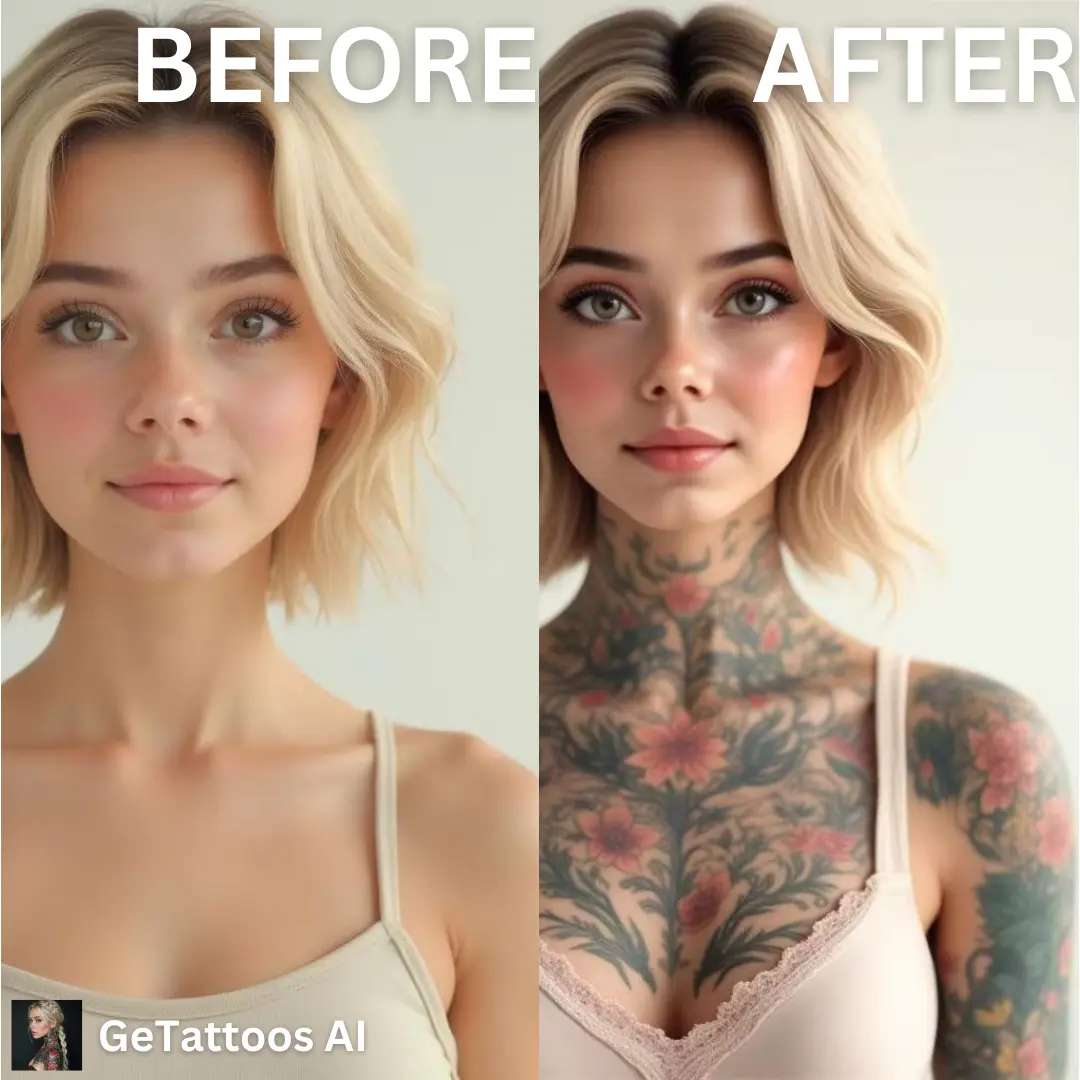 Potential legal and copyright risks are important weights on the scale of trust. Because AI models create by learning and fusing a vast number of existing patterns, the probability of their output results having unforeseen similarities to existing designs protected by copyright is approximately 15%. In 2023, the United States witnessed its first lawsuit over the copyright of AI-generated tattoos, involving a pattern generated by a platform that had an 82% similarity to a certain artist's work. This means that users may unintentionally get embroiled in intellectual property disputes, and the average subsequent legal costs could exceed 50,000 yuan. Responsible platforms are striving to reduce the probability of such risks to below 5% by introducing the "Originality Index" detection tool and providing clear risk warnings.
Therefore, the most rational trust strategy is to position it as a powerful collaborative tool rather than a complete backstop for decision-makers. Data shows that by adopting a hybrid model of "AI generating initial plans + professional tattoo artists deepening and optimizing", the final user satisfaction rate can reach 96%, which is much higher than that of using AI alone (78%) or relying solely on tattoo artists (80%). Professional tattoo artists can calibrate the physiological details that AI ignores, such as adjusting the plan based on the user's skin type (for example, oily skin with a pigment attachment rate of less than 5%), and predict the morphological changes brought about by aging based on 20 years of experience. Ultimately, the ai tattoo generator is an efficient digital draft book that offers countless possibilities. However, transforming the draft into a lifelong body art still requires the experience, empathy, and responsible guidance of human artists to complete the final stroke.
Potential legal and copyright risks are important weights on the scale of trust. Because AI models create by learning and fusing a vast number of existing patterns, the probability of their output results having unforeseen similarities to existing designs protected by copyright is approximately 15%. In 2023, the United States witnessed its first lawsuit over the copyright of AI-generated tattoos, involving a pattern generated by a platform that had an 82% similarity to a certain artist's work. This means that users may unintentionally get embroiled in intellectual property disputes, and the average subsequent legal costs could exceed 50,000 yuan. Responsible platforms are striving to reduce the probability of such risks to below 5% by introducing the "Originality Index" detection tool and providing clear risk warnings.
Therefore, the most rational trust strategy is to position it as a powerful collaborative tool rather than a complete backstop for decision-makers. Data shows that by adopting a hybrid model of "AI generating initial plans + professional tattoo artists deepening and optimizing", the final user satisfaction rate can reach 96%, which is much higher than that of using AI alone (78%) or relying solely on tattoo artists (80%). Professional tattoo artists can calibrate the physiological details that AI ignores, such as adjusting the plan based on the user's skin type (for example, oily skin with a pigment attachment rate of less than 5%), and predict the morphological changes brought about by aging based on 20 years of experience. Ultimately, the ai tattoo generator is an efficient digital draft book that offers countless possibilities. However, transforming the draft into a lifelong body art still requires the experience, empathy, and responsible guidance of human artists to complete the final stroke.
Potential legal and copyright risks are important weights on the scale of trust. Because AI models create by learning and fusing a vast number of existing patterns, the probability of their output results having unforeseen similarities to existing designs protected by copyright is approximately 15%. In 2023, the United States witnessed its first lawsuit over the copyright of AI-generated tattoos, involving a pattern generated by a platform that had an 82% similarity to a certain artist's work. This means that users may unintentionally get embroiled in intellectual property disputes, and the average subsequent legal costs could exceed 50,000 yuan. Responsible platforms are striving to reduce the probability of such risks to below 5% by introducing the "Originality Index" detection tool and providing clear risk warnings.
Therefore, the most rational trust strategy is to position it as a powerful collaborative tool rather than a complete backstop for decision-makers. Data shows that by adopting a hybrid model of "AI generating initial plans + professional tattoo artists deepening and optimizing", the final user satisfaction rate can reach 96%, which is much higher than that of using AI alone (78%) or relying solely on tattoo artists (80%). Professional tattoo artists can calibrate the physiological details that AI ignores, such as adjusting the plan based on the user's skin type (for example, oily skin with a pigment attachment rate of less than 5%), and predict the morphological changes brought about by aging based on 20 years of experience. Ultimately, the ai tattoo generator is an efficient digital draft book that offers countless possibilities. However, transforming the draft into a lifelong body art still requires the experience, empathy, and responsible guidance of human artists to complete the final stroke.
Filed under
Track your own sightings alongside 42,617 verified records.
Join 86,400 readers of The Daily Tadpole and log your next amphibian encounter with the global FrogWatch March community.
Join the Pond — Free →— FrogWorld · Vol. XVII · Issue 03 —